Posts

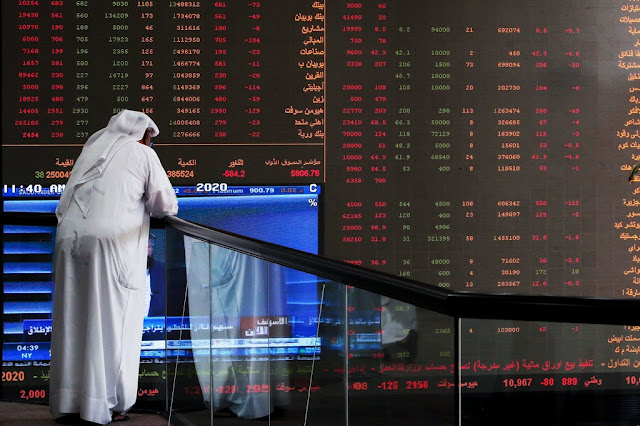
Negative oil prices: Once a wild dream, now a reality!
Image
Only as we start thinking that the Corona virus havoc couldn't get any more crazy, it gets Crazier! Yes, o il is now cheaper than water! With the latest headlines of oil being priced at $0.15/Barrel, crude oil has come to a point where buyers are paid money to buy the oil.  Before we get into any details,  Let's take a look at some statistics. The world oil prices are controlled by an oligopoly of mainly 3 suppliers, the OPEC (a cartel of 14 nations holding around 80% of global oil reservoirs), USA (the largest producer of oil @ 18% share) and Russia (the 3rd largest oil producer @ 12% share)  It's main objective is to control the global oil prices by controlling the demand and supply of the oil prices. As an example Saudi Arabia, the leader of the cartel, and the 2nd largest oil producer in the world, never produced more than 10.5 Mn barrels a day (despite having the ability to produce much more) in order to keep a check on the prices. ...

Is Excess Money killing the Start-Ups?

Image
Ever wondered what happens when just one extra atom of Oxygen (O) is added to the life giving gas, Oxygen (O2)? It turns into the toxic element Ozone (O3) There’s a fallacy that the only way start-ups can fail is by running out of money. What’s less often discussed are the downsides of raising too much money and the circumstances of excess money heading the start-up towards counter developmental purposes. Funding under the wrong circumstances can often land the start-up in a position where good money is chasing bad money. Check out the latest fundraising events in Indian Startup ecology  to understand the trend. Most of the entrepreneurs are of the opinion that funding is the solution to all the problems plaguing their start-up, and dive into the money hunt game. But seldom do they identify if that money is masking the real issues. Diamonds are only made under pressure. The essence of the start-up may be lost when there’s too much money at hand. I...

Telecom Industry Conundrum – The Chronicles of an Unsavory Competition

Image
The telecom industry and data has been one of the hottest topics of late. The data war dates back to 2016 when  Reliance Jio  Infocomm Ltd., half-owned by India’s richest man, Mukesh Ambani entered the market and relentlessly undercut Vodafone and the other leading carrier, Bharti Airtel Ltd.  Vodafone Idea has been struggling to keep its head above water and is lobbying for government intervention to correct a market that’s been skewed by freebies thrown around by Ambani’s Jio. Back in the day most telecom companies operated under the presumption that data was going to remain an expensive commodity. Basically, they were convinced that they could charge customers exorbitant rates to provide calling and internet services and that this would continue to be the status quo for the foreseeable future. So they sold expensive plans, offered bare minimum services and were happy to continue enjoying their time. On the other end, they were also overpaying for almost e...

Wadhawans and PMC – The Saga of a Corporate Quid Pro Quo.

Image
As news reports of scams pour in one after the other, it is becoming clear that credit administration in India’s public sector banks is a near-sham. With the Punjab & Maharashtra Cooperative (PMC) Bank adding to another crisis in the banking sector in India, an economic fallout seems quite within our reach. The 5 pager confession letter of the now suspended MD of PMC Bank Joy Thomas shows how the 2 organizations helped each other survive for over 3 decades. The roots of the PMC saga date back to 1986 when the Wadhawans threw a life jacket for the drowning PMC Bank. The brothers’ duo Rajesh and Rakesh Wadhawan infused a capital of 13 lakhs and bailed out the bank of the negative net worth position. In another turn of events, during the 2004 cooperative banks’ crisis, the bank found itself trying hard to keep head above water, as the customers panicked to withdraw their deposits. The company’s liquidity position was deeply bruised with these moments of crisis. This was ...